
A glance at the stars, a blind trust in reviews, and suddenly you feel ready to face the dust of the construction site. Yet, behind the shine of online reviews, doubt creeps in: who really guides our choice, and who leads us to screw things up?
Screwing a shelf together thanks to the promise of a perfect tool is a bit like believing in Santa Claus in the middle of a heatwave. Platforms are overflowing with advice and testimonials, but it’s hard to distinguish the sincere DIYer from the seller seeking bonuses. Have reviews become the bubble level for internet users, or just a digital mirage that wobbles at the slightest shake?
Why online reviews about DIY provoke so much distrust
The massive arrival of online DIY has disrupted our shopping habits, but faith in internet customer reviews is gradually eroding. Before clicking “order,” the majority of French people consult online reviews – even if it means getting lost in a sea of contradictory feedback. The abundance of testimonials does not always rhyme with reliability. In-depth analyses highlight some less-than-glorious practices:
- Fake customers writing praises on demand to boost sales.
- Ratings inflated with gifts or vouchers, in a bid to collect positive feedback at all costs.
- Obscure ranking systems, where only positive reviews float to the top of the page.
The law, through the consumer code, requires total transparency regarding the handling of reviews. Yet, the reality is far less clear. Platforms struggle to filter authenticity, and buyers find themselves navigating between trust and suspicion. Who to believe, and when does the trap of an oversold product snap shut? The temptation is great for some sites to stifle negative reviews. Reporting a dubious comment can sometimes feel like an obstacle course, and the business registry does not always provide the hoped-for answers. This distrust is illustrated, for example, in the heated debates surrounding reviews on institutdubricolage.com, where each testimony is scrutinized, dissected, and questioned. Faced with this digital cacophony, customers desperately seek a reliable compass. But the proliferation of online reviews, the lack of rigorous control, and the ambiguity surrounding the authors’ identities cultivate uncertainty. A jungle where one moves forward tentatively, with no guarantee of finding the tool that won’t fail at the first turn of the screwdriver.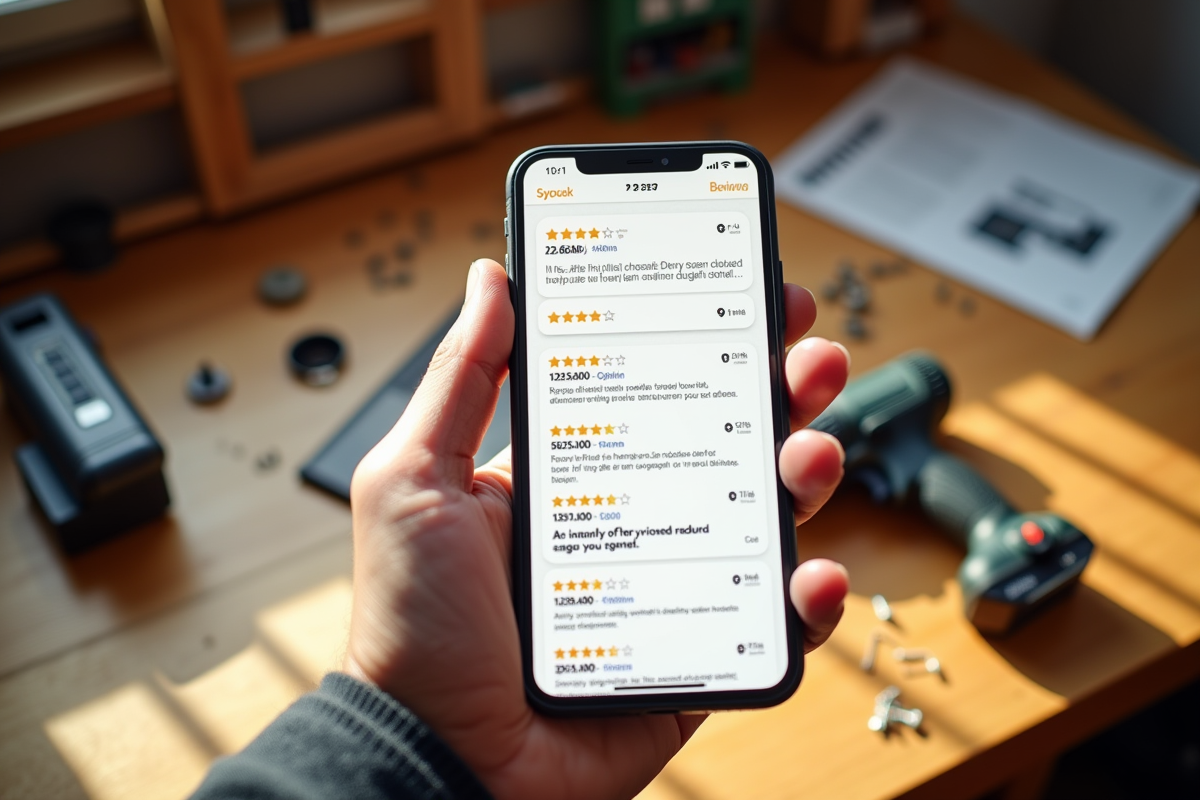
Recognizing the signs of a reliable review to better choose your tools and services
Differentiating a sincere customer review from a fake comment is quite an art. On major online DIY platforms, where each opinion can sway the purchasing decision, savvy customers learn to track the subtle signals that reveal the truth behind the text.
- The date of the experience: a review posted right after the purchase, with a precise time reference, always carries more weight than a vague comment or one dated several years back.
- The richness of details: when the author describes the actual use of the product, mentions the sturdiness of the handle or the speed of the delivery, you can feel the concrete experience. In contrast, a simple “Perfect, I recommend!” without context sounds hollow.
- The variety of feedback: an avalanche of positive reviews or, conversely, a succession of harsh criticisms should raise red flags. A mix of genres is a sign of an experience shared by different profiles.
Another reflex to adopt: use the function to report a suspicious review. Some sites have moderation teams ready to verify the authenticity of the comments reported by the community. Spotting the mention “verified review” adds an extra layer of trust, especially when the purchase or service is confirmed. Finally, cross-referencing internet customer reviews with independent sources – specialized forums, consumer sites, feedback on social networks – allows you to weave a safety net around your choice, especially if you’re investing in something long-lasting.
Buying a tool online is a bit like drilling into a load-bearing wall: it’s better to ensure its solidity before making any hole. Between caution and intuition, the truth is never far away – you just need to know where to look.