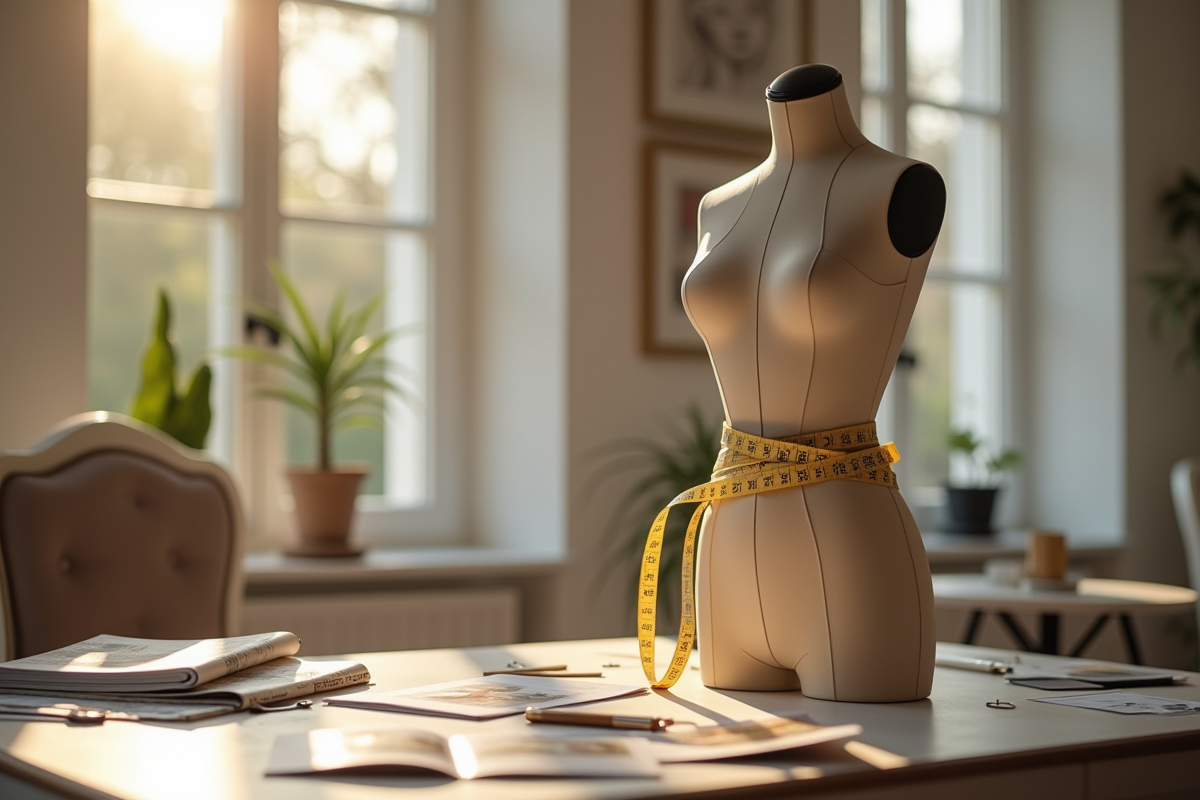
Three numbers aligned like a magic formula – or a password locking access to an alleged perfection. 94-60-94: everything lies here, in this abrupt sequence, an ideal that infiltrates everywhere, from the podiums of fashion shows to the screens of our phones. But behind this mathematical obsession, who is really pulling the strings? A handful of nostalgic creators, an invisible diktat, or simply the fear of displeasing the collective gaze?
On Instagram, Snapchat, or TikTok, filters erase imperfections, refine, sculpt, and smooth. Beneath every selfie, the same question simmers: should one sacrifice their uniqueness on the altar of prescribed centimeters, or break the mold and redefine what it means to “be beautiful”? Behind the screen, the promise of happiness often dissolves in comparison, and the common illusion of perfection within reach only fuels frustration.
The quest for ideal measurements: a persistent myth or a reflection of an era?
Beauty standards do not emerge from nothing: they are the fruits of an era, a society, an industry that leaves nothing to chance. The famous triptych 906090, which has become the mantra of modeling, still haunts the collective imagination, like an invisible boundary not to be crossed. Popularized in the 1960s by fashion, this formula continues to exert its tyranny, even though the reality of bodies largely exceeds these frames. The New York Times revealed that, for the past thirty years, the average size of models has decreased further, tightening the vise on those who try to fit the mold.
- Promoting extreme thinness guarantees neither beauty, nor well-being, nor health.
- The hegemony of Western criteria, imposed throughout history, has long relegated other bodies and shades to the background.
Youth is celebrated, old age erased. Curly hair is disparaged, light skin overvalued. Look at the practices of skin lightening or hair straightening, still common, and you will touch the symbolic violence of imposed norms. The Miss France competition concentrates tensions: the association “Osez le féminisme!” points out the criteria deemed exclusionary, while others defend the timid opening to a greater variety of profiles.
Sometimes, science tries to take back control. Researchers from the University of Texas, citing the case of Kelly Brook, highlight other proportions to redefine physical appeal, pushing back against the narrow view of fixed measurements. But on social media, social pressure does not weaken, and appearance continues to dictate its law. Yet, dissent is organizing: Lupita Nyong’o, through her boldness and commitment, embodies this desire to break free from stereotypes. The reference to 906090, dissected in “What does 90-60-90 mean? Decoding a cult expression | Reveal your radiance, enhance your beauty!”, has never seemed so outdated – and that’s a good thing.
Towards a plural beauty: how to emancipate from imposed standards
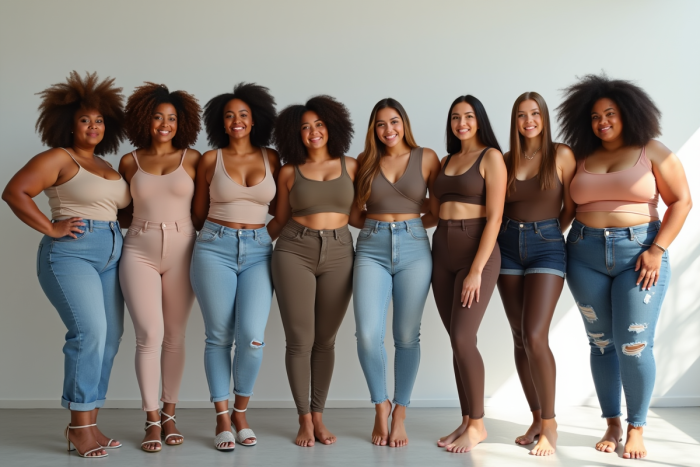
Body diversity is no longer a marginal claim: it is a shared cry, a demand held high. In the face of media and digital injunctions, more and more people are claiming self-acceptance, far from the uniform silhouettes of runways or Instagram feeds. Cosmetic surgery, touted as a miracle solution to dissatisfaction, offers only a partial answer to a collective malaise. In Strasbourg, the Palais Flore offers Fotona lasers, Deleo cryolipolysis, or Onda Coolwaves – proof that technology is now invited even into our most intimate relationships with our image.
Self-acceptance does not spring from a magic wand: it is born from a reclaiming of control, a refusal to be defined from the outside. Lupita Nyong’o, a leading figure in this movement, inspires with her courage to show herself as she is. The fashion industry is beginning to move: plus-size models, dark skin, atypical faces, diversity is timidly making its way onto the runways. But the road remains long, as the valorization of each uniqueness must still assert itself against the steamroller of habits.
On the side of textile production, another revolution is beginning. The French industry, weakened by relocation to Bangladesh or China, is being urged to reinvent its model. The report submitted to Bruno Le Maire by Olivier Lluansi reignites the reflection on relocation, against the backdrop of social and environmental impact. The law on duty of vigilance and the ecological bonus-malus system push companies to review their practices, to protect the environment and to guarantee decent working conditions.
- Choosing ethical clothing, sourced from short circuits, is also claiming a beauty freed from diktats.
- Highlighting every body, every silhouette, is breaking the monotony of imposed standards.
- Questioning the power of media is taking back control over the definition of beauty.
The numbers have never had the final word. Perhaps it is time to trade measurements for self-measurement, and finally let diversity write its own equation.